From his award-winning opera Blood on the Fields to his position at the helm of The Lincoln Center Jazz Orchestra in New York City, the juggernaut all started with Wynton Marsalis Wynton Marsalis � an album still fully capable of blowing one away to this day.
� A. Scott Galloway
Nearly all of these releases came with liner note essays slavishly rendered by Stanley Crouch. And Wynton�s groups would become the launching pad not just for Branford, Kirkland, Seay and Tain here, but a long line of excellent players including pianist Marcus Roberts, drummer Herlin Riley and saxophonist Wessell �Warmdaddy� Anderson.
From his award-winning opera Blood on the Fields to his position at the helm of The Lincoln Center Jazz Orchestra in New York City, the juggernaut all started with Wynton Marsalis Wynton Marsalis � an album still fully capable of blowing one away to this day.
� A. Scott Galloway
The album comes to a close with Wynton�s wee hours creeper �Twilight,� the bass chair changing once to Charles Fambrough holding down the pulse. This is music perfect for film noir telling a story of any and everything that can go bump in the night. It features some playful spook and fade dialogues between Kirkland, Tain, Wynton and Branford as Fambrough anchors. Then by Branford�s solo, the piece opens into a fierce swing that gives Fambrough his time to roam and shine. And a masterful sneak creep is had by all.
Wynton Marsalis Wynton Marsalis was but the entry point for the trumpeter whose unique contract allowed for multiple releases a year � in jazz and classical. Prodigious as a composer and staggeringly prolific in his expressions, Wynton would create over 40 works in under 20 years for Sony (before moving to Blue Note) that extended over several individually released LPs, full on suites, concept albums as well as collaborative projects with Pops Ellis, opera singer Kathleen Battle and many more.

Nearly all of these releases came with liner note essays slavishly rendered by Stanley Crouch. And Wynton�s groups would become the launching pad not just for Branford, Kirkland, Seay and Tain here, but a long line of excellent players including pianist Marcus Roberts, drummer Herlin Riley and saxophonist Wessell �Warmdaddy� Anderson.
From his award-winning opera Blood on the Fields to his position at the helm of The Lincoln Center Jazz Orchestra in New York City, the juggernaut all started with Wynton Marsalis Wynton Marsalis � an album still fully capable of blowing one away to this day.
� A. Scott Galloway
This is pure Wynton, near-naked, finding just the right approach for each note as the arrangement builds to a swing of interplay between the trumpet prince and Hancock then ends with a solo statement from Wynton. It is likely the soundtrack to the contemplation of the cover photo.
The album comes to a close with Wynton�s wee hours creeper �Twilight,� the bass chair changing once to Charles Fambrough holding down the pulse. This is music perfect for film noir telling a story of any and everything that can go bump in the night. It features some playful spook and fade dialogues between Kirkland, Tain, Wynton and Branford as Fambrough anchors. Then by Branford�s solo, the piece opens into a fierce swing that gives Fambrough his time to roam and shine. And a masterful sneak creep is had by all.
Wynton Marsalis Wynton Marsalis was but the entry point for the trumpeter whose unique contract allowed for multiple releases a year � in jazz and classical. Prodigious as a composer and staggeringly prolific in his expressions, Wynton would create over 40 works in under 20 years for Sony (before moving to Blue Note) that extended over several individually released LPs, full on suites, concept albums as well as collaborative projects with Pops Ellis, opera singer Kathleen Battle and many more.
Nearly all of these releases came with liner note essays slavishly rendered by Stanley Crouch. And Wynton�s groups would become the launching pad not just for Branford, Kirkland, Seay and Tain here, but a long line of excellent players including pianist Marcus Roberts, drummer Herlin Riley and saxophonist Wessell �Warmdaddy� Anderson.
From his award-winning opera Blood on the Fields to his position at the helm of The Lincoln Center Jazz Orchestra in New York City, the juggernaut all started with Wynton Marsalis Wynton Marsalis � an album still fully capable of blowing one away to this day.
� A. Scott Galloway
Anthony Newley & Leslie Bricusse�s deeply emotive ballad �Who Can I Turn To (When Nobody Needs Me)� places the spotlight squarely on Marsalis as Branford lays out to make this a quartet only affair of Wynton with the legendary trio. Hancock sets the table with a lovely introduction then Wynton caresses the lonesome melody like a windshield wiping away the tears of goodbye.
This is pure Wynton, near-naked, finding just the right approach for each note as the arrangement builds to a swing of interplay between the trumpet prince and Hancock then ends with a solo statement from Wynton. It is likely the soundtrack to the contemplation of the cover photo.
The album comes to a close with Wynton�s wee hours creeper �Twilight,� the bass chair changing once to Charles Fambrough holding down the pulse. This is music perfect for film noir telling a story of any and everything that can go bump in the night. It features some playful spook and fade dialogues between Kirkland, Tain, Wynton and Branford as Fambrough anchors. Then by Branford�s solo, the piece opens into a fierce swing that gives Fambrough his time to roam and shine. And a masterful sneak creep is had by all.
Wynton Marsalis Wynton Marsalis was but the entry point for the trumpeter whose unique contract allowed for multiple releases a year � in jazz and classical. Prodigious as a composer and staggeringly prolific in his expressions, Wynton would create over 40 works in under 20 years for Sony (before moving to Blue Note) that extended over several individually released LPs, full on suites, concept albums as well as collaborative projects with Pops Ellis, opera singer Kathleen Battle and many more.
Nearly all of these releases came with liner note essays slavishly rendered by Stanley Crouch. And Wynton�s groups would become the launching pad not just for Branford, Kirkland, Seay and Tain here, but a long line of excellent players including pianist Marcus Roberts, drummer Herlin Riley and saxophonist Wessell �Warmdaddy� Anderson.
From his award-winning opera Blood on the Fields to his position at the helm of The Lincoln Center Jazz Orchestra in New York City, the juggernaut all started with Wynton Marsalis Wynton Marsalis � an album still fully capable of blowing one away to this day.
� A. Scott Galloway
Side 2 opens with the song that went on to become a radio favorite and often covered classic: Tony Williams� �Sister Cheryl.� The wistfully floating melody over a variation on the tom-tom groove of Ahmad Jamal�s arrangement of �Poinciana� allowed for stretched out storytelling. Dynamic crests reveal the hearts of Wynton, Branford and Hancock, who takes his one solo of the album here. Williams would go on to record the song himself three years later on his return to Blue Note Records, Foreign Intrigue (1985)�with a few subtle changes.
Anthony Newley & Leslie Bricusse�s deeply emotive ballad �Who Can I Turn To (When Nobody Needs Me)� places the spotlight squarely on Marsalis as Branford lays out to make this a quartet only affair of Wynton with the legendary trio. Hancock sets the table with a lovely introduction then Wynton caresses the lonesome melody like a windshield wiping away the tears of goodbye.
This is pure Wynton, near-naked, finding just the right approach for each note as the arrangement builds to a swing of interplay between the trumpet prince and Hancock then ends with a solo statement from Wynton. It is likely the soundtrack to the contemplation of the cover photo.
The album comes to a close with Wynton�s wee hours creeper �Twilight,� the bass chair changing once to Charles Fambrough holding down the pulse. This is music perfect for film noir telling a story of any and everything that can go bump in the night. It features some playful spook and fade dialogues between Kirkland, Tain, Wynton and Branford as Fambrough anchors. Then by Branford�s solo, the piece opens into a fierce swing that gives Fambrough his time to roam and shine. And a masterful sneak creep is had by all.
Wynton Marsalis Wynton Marsalis was but the entry point for the trumpeter whose unique contract allowed for multiple releases a year � in jazz and classical. Prodigious as a composer and staggeringly prolific in his expressions, Wynton would create over 40 works in under 20 years for Sony (before moving to Blue Note) that extended over several individually released LPs, full on suites, concept albums as well as collaborative projects with Pops Ellis, opera singer Kathleen Battle and many more.
Nearly all of these releases came with liner note essays slavishly rendered by Stanley Crouch. And Wynton�s groups would become the launching pad not just for Branford, Kirkland, Seay and Tain here, but a long line of excellent players including pianist Marcus Roberts, drummer Herlin Riley and saxophonist Wessell �Warmdaddy� Anderson.
From his award-winning opera Blood on the Fields to his position at the helm of The Lincoln Center Jazz Orchestra in New York City, the juggernaut all started with Wynton Marsalis Wynton Marsalis � an album still fully capable of blowing one away to this day.
� A. Scott Galloway
Ron Carter�s �R.J.� boasts a tricky, trilling head that bursts into a brisk swing propelled by Williams as Wynton (breaking out the mute, Miles-style), Branford on soprano and Hancock take turns in a blowing session. Side 1 closes with Marsalis� �Hesitation,� which finds Wynton and Branford holding conversational court without the harmonic net of a piano while Carter walks that bass to Williams� straight swinging bru<a href="1s.
Side 2 opens with the song that went on to become a radio favorite and often covered classic: Tony Williams� �Sister Cheryl.� The wistfully floating melody over a variation on the tom-tom groove of Ahmad Jamal�s arrangement of �Poinciana� allowed for stretched out storytelling. Dynamic crests reveal the hearts of Wynton, Branford and Hancock, who takes his one solo of the album here. Williams would go on to record the song himself three years later on his return to Blue Note Records, Foreign Intrigue (1985)�with a few subtle changes.
Anthony Newley & Leslie Bricusse�s deeply emotive ballad �Who Can I Turn To (When Nobody Needs Me)� places the spotlight squarely on Marsalis as Branford lays out to make this a quartet only affair of Wynton with the legendary trio. Hancock sets the table with a lovely introduction then Wynton caresses the lonesome melody like a windshield wiping away the tears of goodbye.
This is pure Wynton, near-naked, finding just the right approach for each note as the arrangement builds to a swing of interplay between the trumpet prince and Hancock then ends with a solo statement from Wynton. It is likely the soundtrack to the contemplation of the cover photo.
The album comes to a close with Wynton�s wee hours creeper �Twilight,� the bass chair changing once to Charles Fambrough holding down the pulse. This is music perfect for film noir telling a story of any and everything that can go bump in the night. It features some playful spook and fade dialogues between Kirkland, Tain, Wynton and Branford as Fambrough anchors. Then by Branford�s solo, the piece opens into a fierce swing that gives Fambrough his time to roam and shine. And a masterful sneak creep is had by all.
Wynton Marsalis Wynton Marsalis was but the entry point for the trumpeter whose unique contract allowed for multiple releases a year � in jazz and classical. Prodigious as a composer and staggeringly prolific in his expressions, Wynton would create over 40 works in under 20 years for Sony (before moving to Blue Note) that extended over several individually released LPs, full on suites, concept albums as well as collaborative projects with Pops Ellis, opera singer Kathleen Battle and many more.
Nearly all of these releases came with liner note essays slavishly rendered by Stanley Crouch. And Wynton�s groups would become the launching pad not just for Branford, Kirkland, Seay and Tain here, but a long line of excellent players including pianist Marcus Roberts, drummer Herlin Riley and saxophonist Wessell �Warmdaddy� Anderson.
From his award-winning opera Blood on the Fields to his position at the helm of The Lincoln Center Jazz Orchestra in New York City, the juggernaut all started with Wynton Marsalis Wynton Marsalis � an album still fully capable of blowing one away to this day.
� A. Scott Galloway
Hancock quietly got the production credit for Wynton Marsalis� self-titled debut album. He is present but very low-key, soloing on only one song as he seems more interested in putting this amazing young man through his paces. The shrewdly assembled 7-song program consisted of three Marsalis originals, a tune apiece bestowed upon him by Hancock, Carter and Williams who also played in four numbers, plus the inclusion of a ballad standard � each song showcasing specific strengths of Marsalis.
Hancock�s brief �I�ll Be There When the Time is Right� is a stately and lyrical piece with sharp, stabbing impulses and shifting feels. It may be only two-and-half-minutes long, but it side-winds in many directions, making for a never a dull moment journey. Interestingly, Hancock does not play on it, leaving that work to Kenny Kirkland with Branford, Seay and Watts.
Ron Carter�s �R.J.� boasts a tricky, trilling head that bursts into a brisk swing propelled by Williams as Wynton (breaking out the mute, Miles-style), Branford on soprano and Hancock take turns in a blowing session. Side 1 closes with Marsalis� �Hesitation,� which finds Wynton and Branford holding conversational court without the harmonic net of a piano while Carter walks that bass to Williams� straight swinging bru<a href="1s.
Side 2 opens with the song that went on to become a radio favorite and often covered classic: Tony Williams� �Sister Cheryl.� The wistfully floating melody over a variation on the tom-tom groove of Ahmad Jamal�s arrangement of �Poinciana� allowed for stretched out storytelling. Dynamic crests reveal the hearts of Wynton, Branford and Hancock, who takes his one solo of the album here. Williams would go on to record the song himself three years later on his return to Blue Note Records, Foreign Intrigue (1985)�with a few subtle changes.
Anthony Newley & Leslie Bricusse�s deeply emotive ballad �Who Can I Turn To (When Nobody Needs Me)� places the spotlight squarely on Marsalis as Branford lays out to make this a quartet only affair of Wynton with the legendary trio. Hancock sets the table with a lovely introduction then Wynton caresses the lonesome melody like a windshield wiping away the tears of goodbye.
This is pure Wynton, near-naked, finding just the right approach for each note as the arrangement builds to a swing of interplay between the trumpet prince and Hancock then ends with a solo statement from Wynton. It is likely the soundtrack to the contemplation of the cover photo.
The album comes to a close with Wynton�s wee hours creeper �Twilight,� the bass chair changing once to Charles Fambrough holding down the pulse. This is music perfect for film noir telling a story of any and everything that can go bump in the night. It features some playful spook and fade dialogues between Kirkland, Tain, Wynton and Branford as Fambrough anchors. Then by Branford�s solo, the piece opens into a fierce swing that gives Fambrough his time to roam and shine. And a masterful sneak creep is had by all.
Wynton Marsalis Wynton Marsalis was but the entry point for the trumpeter whose unique contract allowed for multiple releases a year � in jazz and classical. Prodigious as a composer and staggeringly prolific in his expressions, Wynton would create over 40 works in under 20 years for Sony (before moving to Blue Note) that extended over several individually released LPs, full on suites, concept albums as well as collaborative projects with Pops Ellis, opera singer Kathleen Battle and many more.
Nearly all of these releases came with liner note essays slavishly rendered by Stanley Crouch. And Wynton�s groups would become the launching pad not just for Branford, Kirkland, Seay and Tain here, but a long line of excellent players including pianist Marcus Roberts, drummer Herlin Riley and saxophonist Wessell �Warmdaddy� Anderson.
From his award-winning opera Blood on the Fields to his position at the helm of The Lincoln Center Jazz Orchestra in New York City, the juggernaut all started with Wynton Marsalis Wynton Marsalis � an album still fully capable of blowing one away to this day.
� A. Scott Galloway
Hancock quietly got the production credit for Wynton Marsalis� self-titled debut album. He is present but very low-key, soloing on only one song as he seems more interested in putting this amazing young man through his paces. The shrewdly assembled 7-song program consisted of three Marsalis originals, a tune apiece bestowed upon him by Hancock, Carter and Williams who also played in four numbers, plus the inclusion of a ballad standard � each song showcasing specific strengths of Marsalis.
Hancock�s brief �I�ll Be There When the Time is Right� is a stately and lyrical piece with sharp, stabbing impulses and shifting feels. It may be only two-and-half-minutes long, but it side-winds in many directions, making for a never a dull moment journey. Interestingly, Hancock does not play on it, leaving that work to Kenny Kirkland with Branford, Seay and Watts.
Ron Carter�s �R.J.� boasts a tricky, trilling head that bursts into a brisk swing propelled by Williams as Wynton (breaking out the mute, Miles-style), Branford on soprano and Hancock take turns in a blowing session. Side 1 closes with Marsalis� �Hesitation,� which finds Wynton and Branford holding conversational court without the harmonic net of a piano while Carter walks that bass to Williams� straight swinging bru<a href="1s.
Side 2 opens with the song that went on to become a radio favorite and often covered classic: Tony Williams� �Sister Cheryl.� The wistfully floating melody over a variation on the tom-tom groove of Ahmad Jamal�s arrangement of �Poinciana� allowed for stretched out storytelling. Dynamic crests reveal the hearts of Wynton, Branford and Hancock, who takes his one solo of the album here. Williams would go on to record the song himself three years later on his return to Blue Note Records, Foreign Intrigue (1985)�with a few subtle changes.
Anthony Newley & Leslie Bricusse�s deeply emotive ballad �Who Can I Turn To (When Nobody Needs Me)� places the spotlight squarely on Marsalis as Branford lays out to make this a quartet only affair of Wynton with the legendary trio. Hancock sets the table with a lovely introduction then Wynton caresses the lonesome melody like a windshield wiping away the tears of goodbye.
This is pure Wynton, near-naked, finding just the right approach for each note as the arrangement builds to a swing of interplay between the trumpet prince and Hancock then ends with a solo statement from Wynton. It is likely the soundtrack to the contemplation of the cover photo.
The album comes to a close with Wynton�s wee hours creeper �Twilight,� the bass chair changing once to Charles Fambrough holding down the pulse. This is music perfect for film noir telling a story of any and everything that can go bump in the night. It features some playful spook and fade dialogues between Kirkland, Tain, Wynton and Branford as Fambrough anchors. Then by Branford�s solo, the piece opens into a fierce swing that gives Fambrough his time to roam and shine. And a masterful sneak creep is had by all.
Wynton Marsalis Wynton Marsalis was but the entry point for the trumpeter whose unique contract allowed for multiple releases a year � in jazz and classical. Prodigious as a composer and staggeringly prolific in his expressions, Wynton would create over 40 works in under 20 years for Sony (before moving to Blue Note) that extended over several individually released LPs, full on suites, concept albums as well as collaborative projects with Pops Ellis, opera singer Kathleen Battle and many more.
Nearly all of these releases came with liner note essays slavishly rendered by Stanley Crouch. And Wynton�s groups would become the launching pad not just for Branford, Kirkland, Seay and Tain here, but a long line of excellent players including pianist Marcus Roberts, drummer Herlin Riley and saxophonist Wessell �Warmdaddy� Anderson.
From his award-winning opera Blood on the Fields to his position at the helm of The Lincoln Center Jazz Orchestra in New York City, the juggernaut all started with Wynton Marsalis Wynton Marsalis � an album still fully capable of blowing one away to this day.
� A. Scott Galloway
Wynton was given his first trumpet by Dixieland legend Al Hirt at age six but didn�t take the instrument seriously until he was twelve. Playing in local marching bands, funk bands and orchestras provided him a healthy foundation in the roots of the music but it was his studies of classical music that truly set him apart.
Not just that he studied them but that he attacked them with an even keel attitude that it was not some superior music�just some other music to learn and get under his belt. It helped him with technical things and insights into composition. But he was always ultimately going to be about jazz.
At 18, he attended Julliard School of Music but by the first summer was on the road in the hardest bopping finishing school there was for jazz � the trumpet chair in Art Blakey & The Jazz Messengers quintet under the demanding drummer/leader/educator. Wynton even got a composition into the band book: �Gypsy.�
But it wasn�t long before Herbie Hancock coaxed him into the frontline spot of an all-star quartet. Not just any quartet�but one manned by none other than Miles Davis� galvanizing rhythm section of Hancock on piano, stalwart Ron Carter on bass and lightning rod Tony Williams on drums. Here Wynton was not even in his 20s yet and he was already standing in front of Miles� baddest cats.

Hancock quietly got the production credit for Wynton Marsalis� self-titled debut album. He is present but very low-key, soloing on only one song as he seems more interested in putting this amazing young man through his paces. The shrewdly assembled 7-song program consisted of three Marsalis originals, a tune apiece bestowed upon him by Hancock, Carter and Williams who also played in four numbers, plus the inclusion of a ballad standard � each song showcasing specific strengths of Marsalis.
Hancock�s brief �I�ll Be There When the Time is Right� is a stately and lyrical piece with sharp, stabbing impulses and shifting feels. It may be only two-and-half-minutes long, but it side-winds in many directions, making for a never a dull moment journey. Interestingly, Hancock does not play on it, leaving that work to Kenny Kirkland with Branford, Seay and Watts.
Ron Carter�s �R.J.� boasts a tricky, trilling head that bursts into a brisk swing propelled by Williams as Wynton (breaking out the mute, Miles-style), Branford on soprano and Hancock take turns in a blowing session. Side 1 closes with Marsalis� �Hesitation,� which finds Wynton and Branford holding conversational court without the harmonic net of a piano while Carter walks that bass to Williams� straight swinging bru<a href="1s.
Side 2 opens with the song that went on to become a radio favorite and often covered classic: Tony Williams� �Sister Cheryl.� The wistfully floating melody over a variation on the tom-tom groove of Ahmad Jamal�s arrangement of �Poinciana� allowed for stretched out storytelling. Dynamic crests reveal the hearts of Wynton, Branford and Hancock, who takes his one solo of the album here. Williams would go on to record the song himself three years later on his return to Blue Note Records, Foreign Intrigue (1985)�with a few subtle changes.
Anthony Newley & Leslie Bricusse�s deeply emotive ballad �Who Can I Turn To (When Nobody Needs Me)� places the spotlight squarely on Marsalis as Branford lays out to make this a quartet only affair of Wynton with the legendary trio. Hancock sets the table with a lovely introduction then Wynton caresses the lonesome melody like a windshield wiping away the tears of goodbye.
This is pure Wynton, near-naked, finding just the right approach for each note as the arrangement builds to a swing of interplay between the trumpet prince and Hancock then ends with a solo statement from Wynton. It is likely the soundtrack to the contemplation of the cover photo.
The album comes to a close with Wynton�s wee hours creeper �Twilight,� the bass chair changing once to Charles Fambrough holding down the pulse. This is music perfect for film noir telling a story of any and everything that can go bump in the night. It features some playful spook and fade dialogues between Kirkland, Tain, Wynton and Branford as Fambrough anchors. Then by Branford�s solo, the piece opens into a fierce swing that gives Fambrough his time to roam and shine. And a masterful sneak creep is had by all.
Wynton Marsalis Wynton Marsalis was but the entry point for the trumpeter whose unique contract allowed for multiple releases a year � in jazz and classical. Prodigious as a composer and staggeringly prolific in his expressions, Wynton would create over 40 works in under 20 years for Sony (before moving to Blue Note) that extended over several individually released LPs, full on suites, concept albums as well as collaborative projects with Pops Ellis, opera singer Kathleen Battle and many more.
Nearly all of these releases came with liner note essays slavishly rendered by Stanley Crouch. And Wynton�s groups would become the launching pad not just for Branford, Kirkland, Seay and Tain here, but a long line of excellent players including pianist Marcus Roberts, drummer Herlin Riley and saxophonist Wessell �Warmdaddy� Anderson.
From his award-winning opera Blood on the Fields to his position at the helm of The Lincoln Center Jazz Orchestra in New York City, the juggernaut all started with Wynton Marsalis Wynton Marsalis � an album still fully capable of blowing one away to this day.
� A. Scott Galloway
Wynton was given his first trumpet by Dixieland legend Al Hirt at age six but didn�t take the instrument seriously until he was twelve. Playing in local marching bands, funk bands and orchestras provided him a healthy foundation in the roots of the music but it was his studies of classical music that truly set him apart.
Not just that he studied them but that he attacked them with an even keel attitude that it was not some superior music�just some other music to learn and get under his belt. It helped him with technical things and insights into composition. But he was always ultimately going to be about jazz.
At 18, he attended Julliard School of Music but by the first summer was on the road in the hardest bopping finishing school there was for jazz � the trumpet chair in Art Blakey & The Jazz Messengers quintet under the demanding drummer/leader/educator. Wynton even got a composition into the band book: �Gypsy.�
But it wasn�t long before Herbie Hancock coaxed him into the frontline spot of an all-star quartet. Not just any quartet�but one manned by none other than Miles Davis� galvanizing rhythm section of Hancock on piano, stalwart Ron Carter on bass and lightning rod Tony Williams on drums. Here Wynton was not even in his 20s yet and he was already standing in front of Miles� baddest cats.
Hancock quietly got the production credit for Wynton Marsalis� self-titled debut album. He is present but very low-key, soloing on only one song as he seems more interested in putting this amazing young man through his paces. The shrewdly assembled 7-song program consisted of three Marsalis originals, a tune apiece bestowed upon him by Hancock, Carter and Williams who also played in four numbers, plus the inclusion of a ballad standard � each song showcasing specific strengths of Marsalis.
Hancock�s brief �I�ll Be There When the Time is Right� is a stately and lyrical piece with sharp, stabbing impulses and shifting feels. It may be only two-and-half-minutes long, but it side-winds in many directions, making for a never a dull moment journey. Interestingly, Hancock does not play on it, leaving that work to Kenny Kirkland with Branford, Seay and Watts.
Ron Carter�s �R.J.� boasts a tricky, trilling head that bursts into a brisk swing propelled by Williams as Wynton (breaking out the mute, Miles-style), Branford on soprano and Hancock take turns in a blowing session. Side 1 closes with Marsalis� �Hesitation,� which finds Wynton and Branford holding conversational court without the harmonic net of a piano while Carter walks that bass to Williams� straight swinging bru<a href="1s.
Side 2 opens with the song that went on to become a radio favorite and often covered classic: Tony Williams� �Sister Cheryl.� The wistfully floating melody over a variation on the tom-tom groove of Ahmad Jamal�s arrangement of �Poinciana� allowed for stretched out storytelling. Dynamic crests reveal the hearts of Wynton, Branford and Hancock, who takes his one solo of the album here. Williams would go on to record the song himself three years later on his return to Blue Note Records, Foreign Intrigue (1985)�with a few subtle changes.
Anthony Newley & Leslie Bricusse�s deeply emotive ballad �Who Can I Turn To (When Nobody Needs Me)� places the spotlight squarely on Marsalis as Branford lays out to make this a quartet only affair of Wynton with the legendary trio. Hancock sets the table with a lovely introduction then Wynton caresses the lonesome melody like a windshield wiping away the tears of goodbye.
This is pure Wynton, near-naked, finding just the right approach for each note as the arrangement builds to a swing of interplay between the trumpet prince and Hancock then ends with a solo statement from Wynton. It is likely the soundtrack to the contemplation of the cover photo.
The album comes to a close with Wynton�s wee hours creeper �Twilight,� the bass chair changing once to Charles Fambrough holding down the pulse. This is music perfect for film noir telling a story of any and everything that can go bump in the night. It features some playful spook and fade dialogues between Kirkland, Tain, Wynton and Branford as Fambrough anchors. Then by Branford�s solo, the piece opens into a fierce swing that gives Fambrough his time to roam and shine. And a masterful sneak creep is had by all.
Wynton Marsalis Wynton Marsalis was but the entry point for the trumpeter whose unique contract allowed for multiple releases a year � in jazz and classical. Prodigious as a composer and staggeringly prolific in his expressions, Wynton would create over 40 works in under 20 years for Sony (before moving to Blue Note) that extended over several individually released LPs, full on suites, concept albums as well as collaborative projects with Pops Ellis, opera singer Kathleen Battle and many more.
Nearly all of these releases came with liner note essays slavishly rendered by Stanley Crouch. And Wynton�s groups would become the launching pad not just for Branford, Kirkland, Seay and Tain here, but a long line of excellent players including pianist Marcus Roberts, drummer Herlin Riley and saxophonist Wessell �Warmdaddy� Anderson.
From his award-winning opera Blood on the Fields to his position at the helm of The Lincoln Center Jazz Orchestra in New York City, the juggernaut all started with Wynton Marsalis Wynton Marsalis � an album still fully capable of blowing one away to this day.
� A. Scott Galloway
It starts with the album cover, a Black & White profile of a suited, bespectacled and handsome Marsalis with horn in hand, eyes closed and contemplating what his next note should and will be. The moment capture, shot by William Coupon, telegraphs the intention that the jazz within is emanating from a thinking man�s perspective. A man of intelligence, taste, confidence, class�and tradition. Note the tie, pocket handkerchief and watch. This man means serious business. A sticker on first pressings boasted all-bases-covered quotes from Down Beat Magazine, People Magazine, Leonard Feather of the Los Angeles Times�and jazz bass godfather Ron Carter proclaiming Wynton as, �An incredible player.�
Wynton was 19 at the time his self-titled album was released. He was signed to corporate giant CBS� flagship Columbia Records label by Dr. George Butler after Wynton�s reputation swiftly deemed he was deserving of a major league shot. He was the son of New Orleans jazz royalty, Ellis Marsalis, a living legend in his hometown who those in the know respected implicitly as an educator and cultural curator.

Wynton was given his first trumpet by Dixieland legend Al Hirt at age six but didn�t take the instrument seriously until he was twelve. Playing in local marching bands, funk bands and orchestras provided him a healthy foundation in the roots of the music but it was his studies of classical music that truly set him apart.
Not just that he studied them but that he attacked them with an even keel attitude that it was not some superior music�just some other music to learn and get under his belt. It helped him with technical things and insights into composition. But he was always ultimately going to be about jazz.
At 18, he attended Julliard School of Music but by the first summer was on the road in the hardest bopping finishing school there was for jazz � the trumpet chair in Art Blakey & The Jazz Messengers quintet under the demanding drummer/leader/educator. Wynton even got a composition into the band book: �Gypsy.�
But it wasn�t long before Herbie Hancock coaxed him into the frontline spot of an all-star quartet. Not just any quartet�but one manned by none other than Miles Davis� galvanizing rhythm section of Hancock on piano, stalwart Ron Carter on bass and lightning rod Tony Williams on drums. Here Wynton was not even in his 20s yet and he was already standing in front of Miles� baddest cats.
Hancock quietly got the production credit for Wynton Marsalis� self-titled debut album. He is present but very low-key, soloing on only one song as he seems more interested in putting this amazing young man through his paces. The shrewdly assembled 7-song program consisted of three Marsalis originals, a tune apiece bestowed upon him by Hancock, Carter and Williams who also played in four numbers, plus the inclusion of a ballad standard � each song showcasing specific strengths of Marsalis.
Hancock�s brief �I�ll Be There When the Time is Right� is a stately and lyrical piece with sharp, stabbing impulses and shifting feels. It may be only two-and-half-minutes long, but it side-winds in many directions, making for a never a dull moment journey. Interestingly, Hancock does not play on it, leaving that work to Kenny Kirkland with Branford, Seay and Watts.
Ron Carter�s �R.J.� boasts a tricky, trilling head that bursts into a brisk swing propelled by Williams as Wynton (breaking out the mute, Miles-style), Branford on soprano and Hancock take turns in a blowing session. Side 1 closes with Marsalis� �Hesitation,� which finds Wynton and Branford holding conversational court without the harmonic net of a piano while Carter walks that bass to Williams� straight swinging bru<a href="1s.
Side 2 opens with the song that went on to become a radio favorite and often covered classic: Tony Williams� �Sister Cheryl.� The wistfully floating melody over a variation on the tom-tom groove of Ahmad Jamal�s arrangement of �Poinciana� allowed for stretched out storytelling. Dynamic crests reveal the hearts of Wynton, Branford and Hancock, who takes his one solo of the album here. Williams would go on to record the song himself three years later on his return to Blue Note Records, Foreign Intrigue (1985)�with a few subtle changes.
Anthony Newley & Leslie Bricusse�s deeply emotive ballad �Who Can I Turn To (When Nobody Needs Me)� places the spotlight squarely on Marsalis as Branford lays out to make this a quartet only affair of Wynton with the legendary trio. Hancock sets the table with a lovely introduction then Wynton caresses the lonesome melody like a windshield wiping away the tears of goodbye.
This is pure Wynton, near-naked, finding just the right approach for each note as the arrangement builds to a swing of interplay between the trumpet prince and Hancock then ends with a solo statement from Wynton. It is likely the soundtrack to the contemplation of the cover photo.
The album comes to a close with Wynton�s wee hours creeper �Twilight,� the bass chair changing once to Charles Fambrough holding down the pulse. This is music perfect for film noir telling a story of any and everything that can go bump in the night. It features some playful spook and fade dialogues between Kirkland, Tain, Wynton and Branford as Fambrough anchors. Then by Branford�s solo, the piece opens into a fierce swing that gives Fambrough his time to roam and shine. And a masterful sneak creep is had by all.
Wynton Marsalis Wynton Marsalis was but the entry point for the trumpeter whose unique contract allowed for multiple releases a year � in jazz and classical. Prodigious as a composer and staggeringly prolific in his expressions, Wynton would create over 40 works in under 20 years for Sony (before moving to Blue Note) that extended over several individually released LPs, full on suites, concept albums as well as collaborative projects with Pops Ellis, opera singer Kathleen Battle and many more.
Nearly all of these releases came with liner note essays slavishly rendered by Stanley Crouch. And Wynton�s groups would become the launching pad not just for Branford, Kirkland, Seay and Tain here, but a long line of excellent players including pianist Marcus Roberts, drummer Herlin Riley and saxophonist Wessell �Warmdaddy� Anderson.
From his award-winning opera Blood on the Fields to his position at the helm of The Lincoln Center Jazz Orchestra in New York City, the juggernaut all started with Wynton Marsalis Wynton Marsalis � an album still fully capable of blowing one away to this day.
� A. Scott Galloway
It starts with the album cover, a Black & White profile of a suited, bespectacled and handsome Marsalis with horn in hand, eyes closed and contemplating what his next note should and will be. The moment capture, shot by William Coupon, telegraphs the intention that the jazz within is emanating from a thinking man�s perspective. A man of intelligence, taste, confidence, class�and tradition. Note the tie, pocket handkerchief and watch. This man means serious business. A sticker on first pressings boasted all-bases-covered quotes from Down Beat Magazine, People Magazine, Leonard Feather of the Los Angeles Times�and jazz bass godfather Ron Carter proclaiming Wynton as, �An incredible player.�
Wynton was 19 at the time his self-titled album was released. He was signed to corporate giant CBS� flagship Columbia Records label by Dr. George Butler after Wynton�s reputation swiftly deemed he was deserving of a major league shot. He was the son of New Orleans jazz royalty, Ellis Marsalis, a living legend in his hometown who those in the know respected implicitly as an educator and cultural curator.
Wynton was given his first trumpet by Dixieland legend Al Hirt at age six but didn�t take the instrument seriously until he was twelve. Playing in local marching bands, funk bands and orchestras provided him a healthy foundation in the roots of the music but it was his studies of classical music that truly set him apart.
Not just that he studied them but that he attacked them with an even keel attitude that it was not some superior music�just some other music to learn and get under his belt. It helped him with technical things and insights into composition. But he was always ultimately going to be about jazz.
At 18, he attended Julliard School of Music but by the first summer was on the road in the hardest bopping finishing school there was for jazz � the trumpet chair in Art Blakey & The Jazz Messengers quintet under the demanding drummer/leader/educator. Wynton even got a composition into the band book: �Gypsy.�
But it wasn�t long before Herbie Hancock coaxed him into the frontline spot of an all-star quartet. Not just any quartet�but one manned by none other than Miles Davis� galvanizing rhythm section of Hancock on piano, stalwart Ron Carter on bass and lightning rod Tony Williams on drums. Here Wynton was not even in his 20s yet and he was already standing in front of Miles� baddest cats.
Hancock quietly got the production credit for Wynton Marsalis� self-titled debut album. He is present but very low-key, soloing on only one song as he seems more interested in putting this amazing young man through his paces. The shrewdly assembled 7-song program consisted of three Marsalis originals, a tune apiece bestowed upon him by Hancock, Carter and Williams who also played in four numbers, plus the inclusion of a ballad standard � each song showcasing specific strengths of Marsalis.
Hancock�s brief �I�ll Be There When the Time is Right� is a stately and lyrical piece with sharp, stabbing impulses and shifting feels. It may be only two-and-half-minutes long, but it side-winds in many directions, making for a never a dull moment journey. Interestingly, Hancock does not play on it, leaving that work to Kenny Kirkland with Branford, Seay and Watts.
Ron Carter�s �R.J.� boasts a tricky, trilling head that bursts into a brisk swing propelled by Williams as Wynton (breaking out the mute, Miles-style), Branford on soprano and Hancock take turns in a blowing session. Side 1 closes with Marsalis� �Hesitation,� which finds Wynton and Branford holding conversational court without the harmonic net of a piano while Carter walks that bass to Williams� straight swinging bru<a href="1s.
Side 2 opens with the song that went on to become a radio favorite and often covered classic: Tony Williams� �Sister Cheryl.� The wistfully floating melody over a variation on the tom-tom groove of Ahmad Jamal�s arrangement of �Poinciana� allowed for stretched out storytelling. Dynamic crests reveal the hearts of Wynton, Branford and Hancock, who takes his one solo of the album here. Williams would go on to record the song himself three years later on his return to Blue Note Records, Foreign Intrigue (1985)�with a few subtle changes.
Anthony Newley & Leslie Bricusse�s deeply emotive ballad �Who Can I Turn To (When Nobody Needs Me)� places the spotlight squarely on Marsalis as Branford lays out to make this a quartet only affair of Wynton with the legendary trio. Hancock sets the table with a lovely introduction then Wynton caresses the lonesome melody like a windshield wiping away the tears of goodbye.
This is pure Wynton, near-naked, finding just the right approach for each note as the arrangement builds to a swing of interplay between the trumpet prince and Hancock then ends with a solo statement from Wynton. It is likely the soundtrack to the contemplation of the cover photo.
The album comes to a close with Wynton�s wee hours creeper �Twilight,� the bass chair changing once to Charles Fambrough holding down the pulse. This is music perfect for film noir telling a story of any and everything that can go bump in the night. It features some playful spook and fade dialogues between Kirkland, Tain, Wynton and Branford as Fambrough anchors. Then by Branford�s solo, the piece opens into a fierce swing that gives Fambrough his time to roam and shine. And a masterful sneak creep is had by all.
Wynton Marsalis Wynton Marsalis was but the entry point for the trumpeter whose unique contract allowed for multiple releases a year � in jazz and classical. Prodigious as a composer and staggeringly prolific in his expressions, Wynton would create over 40 works in under 20 years for Sony (before moving to Blue Note) that extended over several individually released LPs, full on suites, concept albums as well as collaborative projects with Pops Ellis, opera singer Kathleen Battle and many more.
Nearly all of these releases came with liner note essays slavishly rendered by Stanley Crouch. And Wynton�s groups would become the launching pad not just for Branford, Kirkland, Seay and Tain here, but a long line of excellent players including pianist Marcus Roberts, drummer Herlin Riley and saxophonist Wessell �Warmdaddy� Anderson.
From his award-winning opera Blood on the Fields to his position at the helm of The Lincoln Center Jazz Orchestra in New York City, the juggernaut all started with Wynton Marsalis Wynton Marsalis � an album still fully capable of blowing one away to this day.
� A. Scott Galloway
The album opens like a ticking time bomb rolling straight into an avalanche � an explosion of rhythm, and rise and fall dynamics heralding the debut of a musician from whom THIS is but one of a hailstorm of missives to come.
The composition: �Father Time.� The composer: Wynton Marsalis. The performance – thrown down by the trumpeter�s Promethean quintet consisting of older brother Branford Marsalis on tenr sax, Kenny Kirkland on piano, Charles Seay on upright bass and Jeff �Tain� Watts manhandling the drums � christening what is likely the most lavish launch of an instrumentalist in jazz music ever.

It starts with the album cover, a Black & White profile of a suited, bespectacled and handsome Marsalis with horn in hand, eyes closed and contemplating what his next note should and will be. The moment capture, shot by William Coupon, telegraphs the intention that the jazz within is emanating from a thinking man�s perspective. A man of intelligence, taste, confidence, class�and tradition. Note the tie, pocket handkerchief and watch. This man means serious business. A sticker on first pressings boasted all-bases-covered quotes from Down Beat Magazine, People Magazine, Leonard Feather of the Los Angeles Times�and jazz bass godfather Ron Carter proclaiming Wynton as, �An incredible player.�
Wynton was 19 at the time his self-titled album was released. He was signed to corporate giant CBS� flagship Columbia Records label by Dr. George Butler after Wynton�s reputation swiftly deemed he was deserving of a major league shot. He was the son of New Orleans jazz royalty, Ellis Marsalis, a living legend in his hometown who those in the know respected implicitly as an educator and cultural curator.
Wynton was given his first trumpet by Dixieland legend Al Hirt at age six but didn�t take the instrument seriously until he was twelve. Playing in local marching bands, funk bands and orchestras provided him a healthy foundation in the roots of the music but it was his studies of classical music that truly set him apart.
Not just that he studied them but that he attacked them with an even keel attitude that it was not some superior music�just some other music to learn and get under his belt. It helped him with technical things and insights into composition. But he was always ultimately going to be about jazz.
At 18, he attended Julliard School of Music but by the first summer was on the road in the hardest bopping finishing school there was for jazz � the trumpet chair in Art Blakey & The Jazz Messengers quintet under the demanding drummer/leader/educator. Wynton even got a composition into the band book: �Gypsy.�
But it wasn�t long before Herbie Hancock coaxed him into the frontline spot of an all-star quartet. Not just any quartet�but one manned by none other than Miles Davis� galvanizing rhythm section of Hancock on piano, stalwart Ron Carter on bass and lightning rod Tony Williams on drums. Here Wynton was not even in his 20s yet and he was already standing in front of Miles� baddest cats.
Hancock quietly got the production credit for Wynton Marsalis� self-titled debut album. He is present but very low-key, soloing on only one song as he seems more interested in putting this amazing young man through his paces. The shrewdly assembled 7-song program consisted of three Marsalis originals, a tune apiece bestowed upon him by Hancock, Carter and Williams who also played in four numbers, plus the inclusion of a ballad standard � each song showcasing specific strengths of Marsalis.
Hancock�s brief �I�ll Be There When the Time is Right� is a stately and lyrical piece with sharp, stabbing impulses and shifting feels. It may be only two-and-half-minutes long, but it side-winds in many directions, making for a never a dull moment journey. Interestingly, Hancock does not play on it, leaving that work to Kenny Kirkland with Branford, Seay and Watts.
Ron Carter�s �R.J.� boasts a tricky, trilling head that bursts into a brisk swing propelled by Williams as Wynton (breaking out the mute, Miles-style), Branford on soprano and Hancock take turns in a blowing session. Side 1 closes with Marsalis� �Hesitation,� which finds Wynton and Branford holding conversational court without the harmonic net of a piano while Carter walks that bass to Williams� straight swinging bru<a href="1s.
Side 2 opens with the song that went on to become a radio favorite and often covered classic: Tony Williams� �Sister Cheryl.� The wistfully floating melody over a variation on the tom-tom groove of Ahmad Jamal�s arrangement of �Poinciana� allowed for stretched out storytelling. Dynamic crests reveal the hearts of Wynton, Branford and Hancock, who takes his one solo of the album here. Williams would go on to record the song himself three years later on his return to Blue Note Records, Foreign Intrigue (1985)�with a few subtle changes.
Anthony Newley & Leslie Bricusse�s deeply emotive ballad �Who Can I Turn To (When Nobody Needs Me)� places the spotlight squarely on Marsalis as Branford lays out to make this a quartet only affair of Wynton with the legendary trio. Hancock sets the table with a lovely introduction then Wynton caresses the lonesome melody like a windshield wiping away the tears of goodbye.
This is pure Wynton, near-naked, finding just the right approach for each note as the arrangement builds to a swing of interplay between the trumpet prince and Hancock then ends with a solo statement from Wynton. It is likely the soundtrack to the contemplation of the cover photo.
The album comes to a close with Wynton�s wee hours creeper �Twilight,� the bass chair changing once to Charles Fambrough holding down the pulse. This is music perfect for film noir telling a story of any and everything that can go bump in the night. It features some playful spook and fade dialogues between Kirkland, Tain, Wynton and Branford as Fambrough anchors. Then by Branford�s solo, the piece opens into a fierce swing that gives Fambrough his time to roam and shine. And a masterful sneak creep is had by all.
Wynton Marsalis Wynton Marsalis was but the entry point for the trumpeter whose unique contract allowed for multiple releases a year � in jazz and classical. Prodigious as a composer and staggeringly prolific in his expressions, Wynton would create over 40 works in under 20 years for Sony (before moving to Blue Note) that extended over several individually released LPs, full on suites, concept albums as well as collaborative projects with Pops Ellis, opera singer Kathleen Battle and many more.
Nearly all of these releases came with liner note essays slavishly rendered by Stanley Crouch. And Wynton�s groups would become the launching pad not just for Branford, Kirkland, Seay and Tain here, but a long line of excellent players including pianist Marcus Roberts, drummer Herlin Riley and saxophonist Wessell �Warmdaddy� Anderson.
From his award-winning opera Blood on the Fields to his position at the helm of The Lincoln Center Jazz Orchestra in New York City, the juggernaut all started with Wynton Marsalis Wynton Marsalis � an album still fully capable of blowing one away to this day.
� A. Scott Galloway
�Technique comes from practice and discipline, but quality comes from understanding. That�s what I want my music to have. The quality of understanding and individuality that makes jazz so great. It�s a long-term challenge.�
The album opens like a ticking time bomb rolling straight into an avalanche � an explosion of rhythm, and rise and fall dynamics heralding the debut of a musician from whom THIS is but one of a hailstorm of missives to come.
The composition: �Father Time.� The composer: Wynton Marsalis. The performance – thrown down by the trumpeter�s Promethean quintet consisting of older brother Branford Marsalis on tenr sax, Kenny Kirkland on piano, Charles Seay on upright bass and Jeff �Tain� Watts manhandling the drums � christening what is likely the most lavish launch of an instrumentalist in jazz music ever.
It starts with the album cover, a Black & White profile of a suited, bespectacled and handsome Marsalis with horn in hand, eyes closed and contemplating what his next note should and will be. The moment capture, shot by William Coupon, telegraphs the intention that the jazz within is emanating from a thinking man�s perspective. A man of intelligence, taste, confidence, class�and tradition. Note the tie, pocket handkerchief and watch. This man means serious business. A sticker on first pressings boasted all-bases-covered quotes from Down Beat Magazine, People Magazine, Leonard Feather of the Los Angeles Times�and jazz bass godfather Ron Carter proclaiming Wynton as, �An incredible player.�
Wynton was 19 at the time his self-titled album was released. He was signed to corporate giant CBS� flagship Columbia Records label by Dr. George Butler after Wynton�s reputation swiftly deemed he was deserving of a major league shot. He was the son of New Orleans jazz royalty, Ellis Marsalis, a living legend in his hometown who those in the know respected implicitly as an educator and cultural curator.
Wynton was given his first trumpet by Dixieland legend Al Hirt at age six but didn�t take the instrument seriously until he was twelve. Playing in local marching bands, funk bands and orchestras provided him a healthy foundation in the roots of the music but it was his studies of classical music that truly set him apart.
Not just that he studied them but that he attacked them with an even keel attitude that it was not some superior music�just some other music to learn and get under his belt. It helped him with technical things and insights into composition. But he was always ultimately going to be about jazz.
At 18, he attended Julliard School of Music but by the first summer was on the road in the hardest bopping finishing school there was for jazz � the trumpet chair in Art Blakey & The Jazz Messengers quintet under the demanding drummer/leader/educator. Wynton even got a composition into the band book: �Gypsy.�
But it wasn�t long before Herbie Hancock coaxed him into the frontline spot of an all-star quartet. Not just any quartet�but one manned by none other than Miles Davis� galvanizing rhythm section of Hancock on piano, stalwart Ron Carter on bass and lightning rod Tony Williams on drums. Here Wynton was not even in his 20s yet and he was already standing in front of Miles� baddest cats.
Hancock quietly got the production credit for Wynton Marsalis� self-titled debut album. He is present but very low-key, soloing on only one song as he seems more interested in putting this amazing young man through his paces. The shrewdly assembled 7-song program consisted of three Marsalis originals, a tune apiece bestowed upon him by Hancock, Carter and Williams who also played in four numbers, plus the inclusion of a ballad standard � each song showcasing specific strengths of Marsalis.
Hancock�s brief �I�ll Be There When the Time is Right� is a stately and lyrical piece with sharp, stabbing impulses and shifting feels. It may be only two-and-half-minutes long, but it side-winds in many directions, making for a never a dull moment journey. Interestingly, Hancock does not play on it, leaving that work to Kenny Kirkland with Branford, Seay and Watts.
Ron Carter�s �R.J.� boasts a tricky, trilling head that bursts into a brisk swing propelled by Williams as Wynton (breaking out the mute, Miles-style), Branford on soprano and Hancock take turns in a blowing session. Side 1 closes with Marsalis� �Hesitation,� which finds Wynton and Branford holding conversational court without the harmonic net of a piano while Carter walks that bass to Williams� straight swinging bru<a href="1s.
Side 2 opens with the song that went on to become a radio favorite and often covered classic: Tony Williams� �Sister Cheryl.� The wistfully floating melody over a variation on the tom-tom groove of Ahmad Jamal�s arrangement of �Poinciana� allowed for stretched out storytelling. Dynamic crests reveal the hearts of Wynton, Branford and Hancock, who takes his one solo of the album here. Williams would go on to record the song himself three years later on his return to Blue Note Records, Foreign Intrigue (1985)�with a few subtle changes.
Anthony Newley & Leslie Bricusse�s deeply emotive ballad �Who Can I Turn To (When Nobody Needs Me)� places the spotlight squarely on Marsalis as Branford lays out to make this a quartet only affair of Wynton with the legendary trio. Hancock sets the table with a lovely introduction then Wynton caresses the lonesome melody like a windshield wiping away the tears of goodbye.
This is pure Wynton, near-naked, finding just the right approach for each note as the arrangement builds to a swing of interplay between the trumpet prince and Hancock then ends with a solo statement from Wynton. It is likely the soundtrack to the contemplation of the cover photo.
The album comes to a close with Wynton�s wee hours creeper �Twilight,� the bass chair changing once to Charles Fambrough holding down the pulse. This is music perfect for film noir telling a story of any and everything that can go bump in the night. It features some playful spook and fade dialogues between Kirkland, Tain, Wynton and Branford as Fambrough anchors. Then by Branford�s solo, the piece opens into a fierce swing that gives Fambrough his time to roam and shine. And a masterful sneak creep is had by all.
Wynton Marsalis Wynton Marsalis was but the entry point for the trumpeter whose unique contract allowed for multiple releases a year � in jazz and classical. Prodigious as a composer and staggeringly prolific in his expressions, Wynton would create over 40 works in under 20 years for Sony (before moving to Blue Note) that extended over several individually released LPs, full on suites, concept albums as well as collaborative projects with Pops Ellis, opera singer Kathleen Battle and many more.
Nearly all of these releases came with liner note essays slavishly rendered by Stanley Crouch. And Wynton�s groups would become the launching pad not just for Branford, Kirkland, Seay and Tain here, but a long line of excellent players including pianist Marcus Roberts, drummer Herlin Riley and saxophonist Wessell �Warmdaddy� Anderson.
From his award-winning opera Blood on the Fields to his position at the helm of The Lincoln Center Jazz Orchestra in New York City, the juggernaut all started with Wynton Marsalis Wynton Marsalis � an album still fully capable of blowing one away to this day.
� A. Scott Galloway
�Technique comes from practice and discipline, but quality comes from understanding. That�s what I want my music to have. The quality of understanding and individuality that makes jazz so great. It�s a long-term challenge.�
The album opens like a ticking time bomb rolling straight into an avalanche � an explosion of rhythm, and rise and fall dynamics heralding the debut of a musician from whom THIS is but one of a hailstorm of missives to come.
The composition: �Father Time.� The composer: Wynton Marsalis. The performance – thrown down by the trumpeter�s Promethean quintet consisting of older brother Branford Marsalis on tenr sax, Kenny Kirkland on piano, Charles Seay on upright bass and Jeff �Tain� Watts manhandling the drums � christening what is likely the most lavish launch of an instrumentalist in jazz music ever.
It starts with the album cover, a Black & White profile of a suited, bespectacled and handsome Marsalis with horn in hand, eyes closed and contemplating what his next note should and will be. The moment capture, shot by William Coupon, telegraphs the intention that the jazz within is emanating from a thinking man�s perspective. A man of intelligence, taste, confidence, class�and tradition. Note the tie, pocket handkerchief and watch. This man means serious business. A sticker on first pressings boasted all-bases-covered quotes from Down Beat Magazine, People Magazine, Leonard Feather of the Los Angeles Times�and jazz bass godfather Ron Carter proclaiming Wynton as, �An incredible player.�
Wynton was 19 at the time his self-titled album was released. He was signed to corporate giant CBS� flagship Columbia Records label by Dr. George Butler after Wynton�s reputation swiftly deemed he was deserving of a major league shot. He was the son of New Orleans jazz royalty, Ellis Marsalis, a living legend in his hometown who those in the know respected implicitly as an educator and cultural curator.
Wynton was given his first trumpet by Dixieland legend Al Hirt at age six but didn�t take the instrument seriously until he was twelve. Playing in local marching bands, funk bands and orchestras provided him a healthy foundation in the roots of the music but it was his studies of classical music that truly set him apart.
Not just that he studied them but that he attacked them with an even keel attitude that it was not some superior music�just some other music to learn and get under his belt. It helped him with technical things and insights into composition. But he was always ultimately going to be about jazz.
At 18, he attended Julliard School of Music but by the first summer was on the road in the hardest bopping finishing school there was for jazz � the trumpet chair in Art Blakey & The Jazz Messengers quintet under the demanding drummer/leader/educator. Wynton even got a composition into the band book: �Gypsy.�
But it wasn�t long before Herbie Hancock coaxed him into the frontline spot of an all-star quartet. Not just any quartet�but one manned by none other than Miles Davis� galvanizing rhythm section of Hancock on piano, stalwart Ron Carter on bass and lightning rod Tony Williams on drums. Here Wynton was not even in his 20s yet and he was already standing in front of Miles� baddest cats.
Hancock quietly got the production credit for Wynton Marsalis� self-titled debut album. He is present but very low-key, soloing on only one song as he seems more interested in putting this amazing young man through his paces. The shrewdly assembled 7-song program consisted of three Marsalis originals, a tune apiece bestowed upon him by Hancock, Carter and Williams who also played in four numbers, plus the inclusion of a ballad standard � each song showcasing specific strengths of Marsalis.
Hancock�s brief �I�ll Be There When the Time is Right� is a stately and lyrical piece with sharp, stabbing impulses and shifting feels. It may be only two-and-half-minutes long, but it side-winds in many directions, making for a never a dull moment journey. Interestingly, Hancock does not play on it, leaving that work to Kenny Kirkland with Branford, Seay and Watts.
Ron Carter�s �R.J.� boasts a tricky, trilling head that bursts into a brisk swing propelled by Williams as Wynton (breaking out the mute, Miles-style), Branford on soprano and Hancock take turns in a blowing session. Side 1 closes with Marsalis� �Hesitation,� which finds Wynton and Branford holding conversational court without the harmonic net of a piano while Carter walks that bass to Williams� straight swinging bru<a href="1s.
Side 2 opens with the song that went on to become a radio favorite and often covered classic: Tony Williams� �Sister Cheryl.� The wistfully floating melody over a variation on the tom-tom groove of Ahmad Jamal�s arrangement of �Poinciana� allowed for stretched out storytelling. Dynamic crests reveal the hearts of Wynton, Branford and Hancock, who takes his one solo of the album here. Williams would go on to record the song himself three years later on his return to Blue Note Records, Foreign Intrigue (1985)�with a few subtle changes.
Anthony Newley & Leslie Bricusse�s deeply emotive ballad �Who Can I Turn To (When Nobody Needs Me)� places the spotlight squarely on Marsalis as Branford lays out to make this a quartet only affair of Wynton with the legendary trio. Hancock sets the table with a lovely introduction then Wynton caresses the lonesome melody like a windshield wiping away the tears of goodbye.
This is pure Wynton, near-naked, finding just the right approach for each note as the arrangement builds to a swing of interplay between the trumpet prince and Hancock then ends with a solo statement from Wynton. It is likely the soundtrack to the contemplation of the cover photo.
The album comes to a close with Wynton�s wee hours creeper �Twilight,� the bass chair changing once to Charles Fambrough holding down the pulse. This is music perfect for film noir telling a story of any and everything that can go bump in the night. It features some playful spook and fade dialogues between Kirkland, Tain, Wynton and Branford as Fambrough anchors. Then by Branford�s solo, the piece opens into a fierce swing that gives Fambrough his time to roam and shine. And a masterful sneak creep is had by all.
Wynton Marsalis Wynton Marsalis was but the entry point for the trumpeter whose unique contract allowed for multiple releases a year � in jazz and classical. Prodigious as a composer and staggeringly prolific in his expressions, Wynton would create over 40 works in under 20 years for Sony (before moving to Blue Note) that extended over several individually released LPs, full on suites, concept albums as well as collaborative projects with Pops Ellis, opera singer Kathleen Battle and many more.
Nearly all of these releases came with liner note essays slavishly rendered by Stanley Crouch. And Wynton�s groups would become the launching pad not just for Branford, Kirkland, Seay and Tain here, but a long line of excellent players including pianist Marcus Roberts, drummer Herlin Riley and saxophonist Wessell �Warmdaddy� Anderson.
From his award-winning opera Blood on the Fields to his position at the helm of The Lincoln Center Jazz Orchestra in New York City, the juggernaut all started with Wynton Marsalis Wynton Marsalis � an album still fully capable of blowing one away to this day.
� A. Scott Galloway
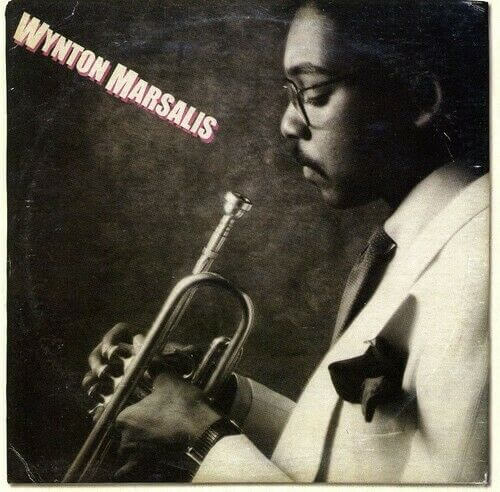
Wynton Marsalis � Wynton Marsalis (Columbia � 1982)
�Technique comes from practice and discipline, but quality comes from understanding. That�s what I want my music to have. The quality of understanding and individuality that makes jazz so great. It�s a long-term challenge.�
The album opens like a ticking time bomb rolling straight into an avalanche � an explosion of rhythm, and rise and fall dynamics heralding the debut of a musician from whom THIS is but one of a hailstorm of missives to come.
The composition: �Father Time.� The composer: Wynton Marsalis. The performance – thrown down by the trumpeter�s Promethean quintet consisting of older brother Branford Marsalis on tenr sax, Kenny Kirkland on piano, Charles Seay on upright bass and Jeff �Tain� Watts manhandling the drums � christening what is likely the most lavish launch of an instrumentalist in jazz music ever.
It starts with the album cover, a Black & White profile of a suited, bespectacled and handsome Marsalis with horn in hand, eyes closed and contemplating what his next note should and will be. The moment capture, shot by William Coupon, telegraphs the intention that the jazz within is emanating from a thinking man�s perspective. A man of intelligence, taste, confidence, class�and tradition. Note the tie, pocket handkerchief and watch. This man means serious business. A sticker on first pressings boasted all-bases-covered quotes from Down Beat Magazine, People Magazine, Leonard Feather of the Los Angeles Times�and jazz bass godfather Ron Carter proclaiming Wynton as, �An incredible player.�
Wynton was 19 at the time his self-titled album was released. He was signed to corporate giant CBS� flagship Columbia Records label by Dr. George Butler after Wynton�s reputation swiftly deemed he was deserving of a major league shot. He was the son of New Orleans jazz royalty, Ellis Marsalis, a living legend in his hometown who those in the know respected implicitly as an educator and cultural curator.
Wynton was given his first trumpet by Dixieland legend Al Hirt at age six but didn�t take the instrument seriously until he was twelve. Playing in local marching bands, funk bands and orchestras provided him a healthy foundation in the roots of the music but it was his studies of classical music that truly set him apart.
Not just that he studied them but that he attacked them with an even keel attitude that it was not some superior music�just some other music to learn and get under his belt. It helped him with technical things and insights into composition. But he was always ultimately going to be about jazz.
At 18, he attended Julliard School of Music but by the first summer was on the road in the hardest bopping finishing school there was for jazz � the trumpet chair in Art Blakey & The Jazz Messengers quintet under the demanding drummer/leader/educator. Wynton even got a composition into the band book: �Gypsy.�
But it wasn�t long before Herbie Hancock coaxed him into the frontline spot of an all-star quartet. Not just any quartet�but one manned by none other than Miles Davis� galvanizing rhythm section of Hancock on piano, stalwart Ron Carter on bass and lightning rod Tony Williams on drums. Here Wynton was not even in his 20s yet and he was already standing in front of Miles� baddest cats.
Hancock quietly got the production credit for Wynton Marsalis� self-titled debut album. He is present but very low-key, soloing on only one song as he seems more interested in putting this amazing young man through his paces. The shrewdly assembled 7-song program consisted of three Marsalis originals, a tune apiece bestowed upon him by Hancock, Carter and Williams who also played in four numbers, plus the inclusion of a ballad standard � each song showcasing specific strengths of Marsalis.
Hancock�s brief �I�ll Be There When the Time is Right� is a stately and lyrical piece with sharp, stabbing impulses and shifting feels. It may be only two-and-half-minutes long, but it side-winds in many directions, making for a never a dull moment journey. Interestingly, Hancock does not play on it, leaving that work to Kenny Kirkland with Branford, Seay and Watts.
Ron Carter�s �R.J.� boasts a tricky, trilling head that bursts into a brisk swing propelled by Williams as Wynton (breaking out the mute, Miles-style), Branford on soprano and Hancock take turns in a blowing session. Side 1 closes with Marsalis� �Hesitation,� which finds Wynton and Branford holding conversational court without the harmonic net of a piano while Carter walks that bass to Williams� straight swinging bru<a href="1s.
Side 2 opens with the song that went on to become a radio favorite and often covered classic: Tony Williams� �Sister Cheryl.� The wistfully floating melody over a variation on the tom-tom groove of Ahmad Jamal�s arrangement of �Poinciana� allowed for stretched out storytelling. Dynamic crests reveal the hearts of Wynton, Branford and Hancock, who takes his one solo of the album here. Williams would go on to record the song himself three years later on his return to Blue Note Records, Foreign Intrigue (1985)�with a few subtle changes.
Anthony Newley & Leslie Bricusse�s deeply emotive ballad �Who Can I Turn To (When Nobody Needs Me)� places the spotlight squarely on Marsalis as Branford lays out to make this a quartet only affair of Wynton with the legendary trio. Hancock sets the table with a lovely introduction then Wynton caresses the lonesome melody like a windshield wiping away the tears of goodbye.
This is pure Wynton, near-naked, finding just the right approach for each note as the arrangement builds to a swing of interplay between the trumpet prince and Hancock then ends with a solo statement from Wynton. It is likely the soundtrack to the contemplation of the cover photo.
The album comes to a close with Wynton�s wee hours creeper �Twilight,� the bass chair changing once to Charles Fambrough holding down the pulse. This is music perfect for film noir telling a story of any and everything that can go bump in the night. It features some playful spook and fade dialogues between Kirkland, Tain, Wynton and Branford as Fambrough anchors. Then by Branford�s solo, the piece opens into a fierce swing that gives Fambrough his time to roam and shine. And a masterful sneak creep is had by all.
Wynton Marsalis Wynton Marsalis was but the entry point for the trumpeter whose unique contract allowed for multiple releases a year � in jazz and classical. Prodigious as a composer and staggeringly prolific in his expressions, Wynton would create over 40 works in under 20 years for Sony (before moving to Blue Note) that extended over several individually released LPs, full on suites, concept albums as well as collaborative projects with Pops Ellis, opera singer Kathleen Battle and many more.
Nearly all of these releases came with liner note essays slavishly rendered by Stanley Crouch. And Wynton�s groups would become the launching pad not just for Branford, Kirkland, Seay and Tain here, but a long line of excellent players including pianist Marcus Roberts, drummer Herlin Riley and saxophonist Wessell �Warmdaddy� Anderson.
From his award-winning opera Blood on the Fields to his position at the helm of The Lincoln Center Jazz Orchestra in New York City, the juggernaut all started with Wynton Marsalis Wynton Marsalis � an album still fully capable of blowing one away to this day.
� A. Scott Galloway