
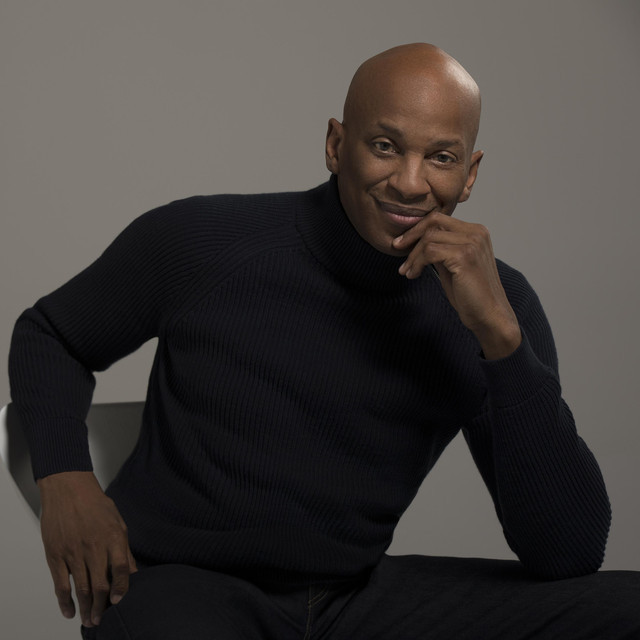
Without naming specific Black preachers, it is hard to ignore how often this pattern shows up in the Black church: a pastor loudly denounces gay people, then later is caught in a scandal, exposed, and sued for sexual harassment.
Donnie McClurkin has said many times that he believes being molested as a boy contributed to his attraction to men, and he even tried dating a woman; when that did not work, he suggested he might never be able to be in a relationship. When we stay in a constant battle with ourselves to become who other people want us to be, especially when they do not even know who they are, we end up simply “existing” instead of living. I am reminded of something my grandfather Terry Winters always said: �Just live” and I’d like to add to that … before you die!
Donnie McClurkin, one of gospel music�s most recognizable voices, is now at the center of a civil sexual?assault lawsuit that directly clashes with his long?standing public crusade against homosexuality. The suit accuses him of grooming and sexually abusing a younger male mentee over years of ministry and travel, allegations he firmly denies through counsel.?

A mentee turns accuser
The plaintiff, Giuseppe Corletto, says he first met McClurkin in 2003, when he was 21 and searching for help reconciling his faith with his sexuality. According to the complaint, Corletto sought out McClurkin as both a spiritual leader and someone who claimed to have been �delivered� from homosexuality, hoping for guidance rather than a romantic or sexual connection.?
Corletto alleges that the relationship did not stay pastoral for long. The lawsuit says private counseling and mentorship slowly shifted into grooming and then into repeated sexual assaults and rapes between roughly 2007 and 2015. The alleged conduct is said to have taken place in multiple settings: during one?on?one �pray the gay away� sessions, on ministry trips while Corletto was traveling as McClurkin�s assistant, and in hotel rooms in California, Atlantic City, Manhattan, Boston, Niagara Falls, Florida, as well as at McClurkin�s Long Island home.?
The suit is brought under New York City�s Gender?Motivated Violence Protection Law, a statute that allows civil claims for violence or abuse alleged to be motivated, at least in part, by the victim�s gender or gender?related characteristics. Corletto�s lawyers frame McClurkin�s conduct as an abuse of spiritual authority, employment power, and the plaintiff�s vulnerability around his sexuality.?
The email that anchors the complaint
A key episode in the filing centers on an alleged incident in a Niagara Falls hotel around 2013. After that encounter, the complaint says, McClurkin sent Corletto an email in which he called himself �the epitome of a desperate dirty �old man�� and wrote that he felt �so foul�so stupid.� In the lawsuit�s telling, this message reads as a contemporaneous apology and a tacit acknowledgment that he had crossed a line with a younger, vulnerable man under his influence.?
That email, quoted in court papers and in media coverage, is currently the most specific piece of written evidence the public has seen beyond Corletto�s narrative. It has not yet been tested in court through discovery, expert analysis, or cross?examination, so its weight as evidence remains to be determined in the litigation process.?
McClurkin�s categorical denial
McClurkin has not issued a long, personal statement about the suit, but he has responded through his attorney, Greg Lisi. The lawyer describes the allegations as �categorically false� and insists that McClurkin did not engage in sexual abuse, assault, or coercion of Corletto. According to these statements, the lawsuit �grossly misrepresents� what occurred more than a decade ago and presents a distorted version of their interactions.?
At this point, the public record consists of the complaint, quoted excerpts such as the alleged Niagara Falls email, and the defense�s blanket denial. There are no reported rulings, no established trial date, and no settlement, making this an early?stage civil case where nothing has yet been proven in court.?
A record of anti?gay rhetoric
What gives the lawsuit particular resonance is that it sits on top of McClurkin�s long history of speaking against homosexuality. For years, he has described himself as someone �delivered� from homosexual behavior by God and has framed same?sex desire as a sin to be resisted rather than an identity to be accepted. Those testimonies helped make him a prominent �ex?gay� figure in Black church circles and beyond.?

In sermons and interviews, McClurkin has repeatedly characterized homosexuality as a �perversion� and compared it to conditions such as diabetes�a desire that never fully disappears but must be controlled. He has also promoted the idea that many Black men are gay because of childhood molestation or absent fathers, a narrative that LGBTQ advocates say pathologizes queer people and misattributes the causes of sexual orientation.?
That rhetoric has had concrete consequences. LGBTQ organizations and allies protested his inclusion in Barack Obama�s 2007 South Carolina gospel tour, arguing that his presence clashed with the campaign�s outreach to queer voters. In 2013, Washington, D.C. officials removed him from a concert marking the 50th anniversary of the March on Washington, citing his polarizing comments on homosexuality.?
�We�ve failed our children�: the Memphis sermon
Critics often point to a 2009 sermon at the Church of God in Christ�s Holy Convocation youth service in Memphis as a turning point in the public backlash. In that message, McClurkin spoke about openly gay boys and young men, describing them as �broken and feminine� and suggesting that their visibility proved the church and community had �failed� their children. Reports from the time note that he also referred to another gay gospel artist as a �perversion.�?
Commentary and blog analyses of the sermon describe it as a �homophobic prophesying rant,� highlighting how he likened his own same?sex attraction to being a diabetic who still wants sugar and equated homosexuality with predatory behavior and threats to children. Those accounts, drawn from video and attendee recollections rather than a formal transcript, helped cement McClurkin�s reputation among many LGBTQ observers as someone who portrays queer people as spiritually broken and dangerous.?
Public image at a crossroads
In recent years, McClurkin has spoken more vulnerably about his personal struggle, acknowledging that he continues to experience attraction to men even as he insists he will live celibately and pursue what he views as a God?honoring, heterosexual?oriented life. For supporters, that tension looks like honest spiritual wrestling. For critics, it underscores a pattern of internal conflict projected onto others through harsh preaching.?
The current lawsuit, with its focus on �pray the gay away� sessions, spiritual authority, and a younger man who came to him for help with his sexuality, brings that pattern into stark relief. Whether a court ultimately finds the allegations credible or not, the case forces a re?examination of how power, theology, and sexuality have been intertwined in McClurkin�s ministry�and at what cost to the people who trusted him most.