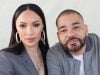
Meta’s newly launched Muse Image AI tool has ignited a critical legal and ethical crisis for radio on-air personalities, threatening their Name, Image, Likeness, and Voice rights by allowing users to generate images using public photos from any tagged Instagram account without consent. This development forces radio programmers, talent agents, and rights holders to urgently reassess contract definitions of identity protection as the technology bypasses traditional opt-in mechanisms for likeness usage.
Unconsented Likeness Generation Becomes Default
Released Tuesday by Meta Superintelligence Labs, Muse Image allows users to tag or at-mention any public Instagram account within a prompt, automatically pulling that account’s public photos into a generated image regardless of whether the tagged person uses Meta AI or agrees to the inclusion. While private accounts are excluded, the feature creates an immediate exposure problem for radio talent who build their brands on visible, searchable public profiles. For the broader base of public accounts, inclusion is the default state rather than a choice, requiring users to manually navigate Instagram’s Sharing and Reuse settings to disable content reuse for AI features. Some high-profile or verified profiles carry additional restrictions, but the default setting leaves most talent vulnerable to unapproved digital replication.
Commercial Campaigns and Contract Revisions Loom
The situation escalates as Meta confirmed that advertisers and agencies will gain access to Muse Image through its Advantage+ creative tools in the coming weeks, extending likeness-generation capabilities directly to commercial campaigns. McVay Media President Mike McVay stated that this development necessitates a revisit of how identity rights are defined in talent contracts, specifically arguing that the standard NIL acronym must include Voice to become NILV. McVay emphasized that while the issue may be an annoyance for talent with lower-level brands, high-profile personalities will be forced to legally protect their owned assets. This aligns with earlier warnings from NAB CEO Curtis LeGeyt regarding AI content scraping as the next major legislative frontier for broadcasters.
Legislative Frontiers and the NO FAKES Act
Congress has already moved to address these concerns with a bipartisan reintroduction of the NO FAKES Act, backed by the NAB, which would hold platforms liable for hosting unauthorized digital replicas of a person’s voice or likeness. The bill aims to preempt a patchwork of conflicting state deepfake laws by establishing federal liability for unauthorized digital replication. While Meta’s extensive Terms and Conditions for users may complicate how the NO FAKES Act applies to Muse Image, the legislative push signals a clear intent to protect talent from unapproved AI usage. Radio industry stakeholders must now prepare for a landscape where digital likeness rights are strictly regulated and contractually fortified.
For editorial consideration and industry coverage inquiries, contact Radio Facts.